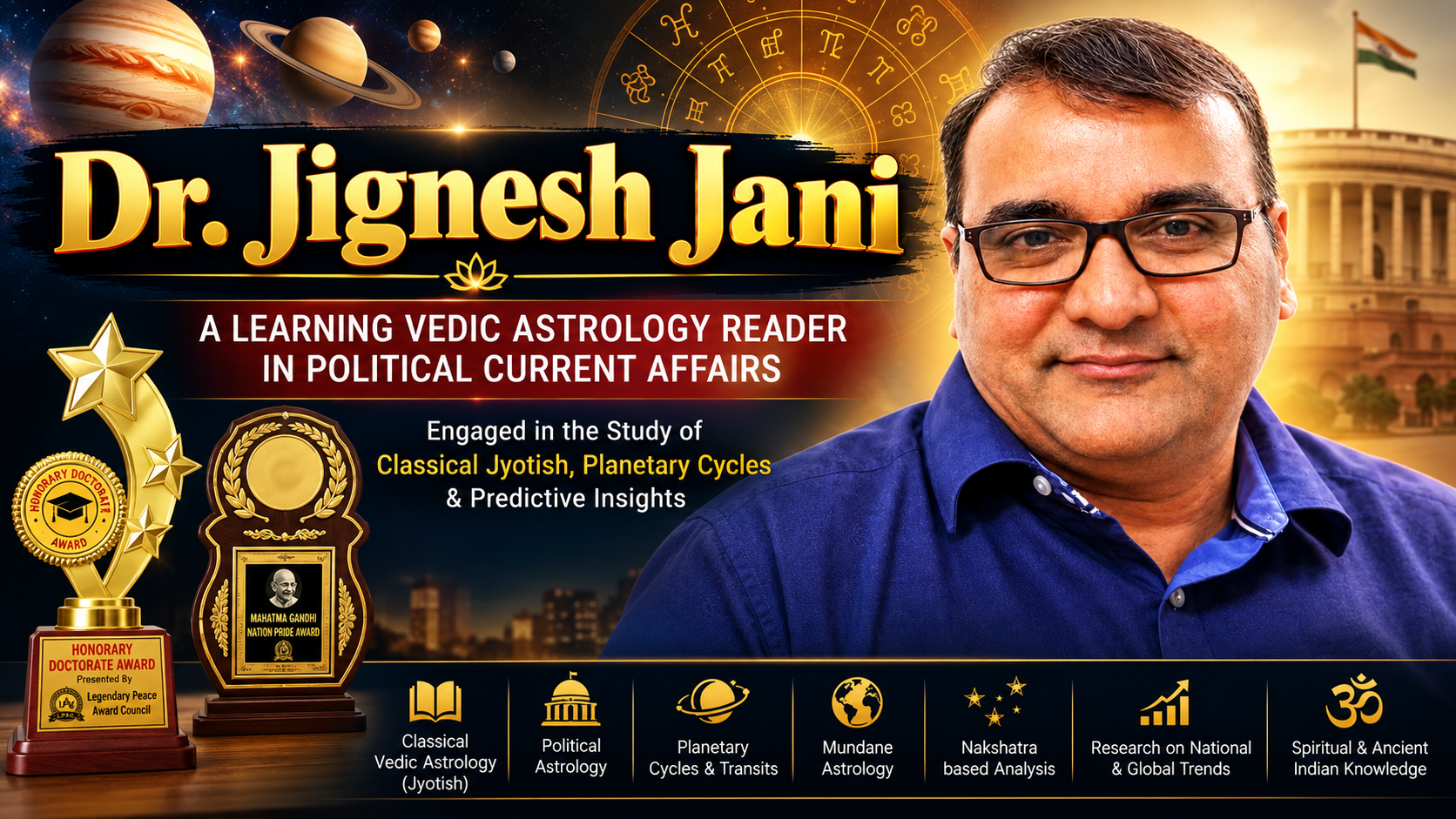
Ahmedabad | July 10, 2026: Vedic astrology researcher Jignesh Jani has shared insights into the traditional concept of Angarak Yoga and its symbolic interpretation in relation to contemporary global affairs. According to Jani, Angarak Yoga, formed by the conjunction of Mars and Rahu in Vedic astrology, has historically been associated with periods of heightened energy, decisive action, and significant societal developments. He emphasized, however, that these interpretations are symbolic and should not be considered scientific predictions.
Jani explained that in classical Jyotish, Mars represents courage, determination, defense, and initiative, while Rahu symbolizes ambition, uncertainty, innovation, and unconventional influences. Many Vedic astrologers believe that when these planetary energies combine, they may symbolically reflect times of increased geopolitical activity, strategic decision-making, and rapid global changes.
Speaking about current international developments, Jani noted that many nations are experiencing shifting alliances, economic fluctuations, technological competition, and evolving diplomatic priorities. While astrology offers one way of symbolically interpreting these broader patterns, he stressed that geopolitical events are ultimately driven by political leadership, economic policies, military strategies, and international diplomacy.
Jani also referred to Jupiter’s traditional significance in Vedic astrology. Often regarded as the planet of wisdom, ethics, justice, and higher knowledge, Jupiter is considered by many astrologers to provide a balancing influence that encourages peaceful dialogue, responsible governance, and diplomatic solutions during periods of uncertainty.
“Vedic astrology is a traditional knowledge system that offers symbolic insights into collective cycles,” Jani said. “It should not be treated as a scientifically validated method for forecasting wars, conflicts, or political outcomes. The future depends on the choices made by governments, institutions, and world leaders.”
He further encouraged readers to distinguish between cultural and spiritual interpretations of astrology and evidence-based geopolitical analysis. According to Jani, responsible public discussion requires understanding both the value of traditional knowledge and the importance of factual information.
Concluding his remarks, Jani expressed hope that international cooperation, constructive diplomacy, and thoughtful leadership will continue to guide nations toward stability, mutual understanding, and long-term global peace despite ongoing challenges.

